General
What Is Field Activation? A Guide for Kenyan Brands
KIZUNA Team ·

What is field activation?
Field activation is a way of marketing where a brand sends people into real-world locations to get a defined audience to take a specific action. That action might be trying a product, downloading an app, signing up, answering a short survey, or visiting a store.
The word that matters is action. A billboard asks for attention. An activation asks for a step, and a step can be counted.
The three parts of an activation
Every activation that works has the same three parts:
- A defined audience in a defined place. "Young professionals in Westlands offices" is a target. "Everyone" is not.
- A clear action. One thing you want people to do, explained simply, such as "install the app and complete your first booking."
- A way to check it happened. If you cannot confirm the action, you only know that people were present. You do not know that they responded.
The third part is the one most campaigns skip.
Examples that fit the Kenyan market
- Product sampling. A beverage or personal-care brand puts product in people's hands in estates, malls and markets, then records who tried it and what they thought.
- App sign-ups. A fintech, delivery or transport app recruits users near campuses and offices, where it can explain the product face to face and help people complete a first action.
- Product education. A SACCO, bank or insurer explains a new product to people who do not trust it yet. Trust is built faster in conversation than in a banner.
- Outlet checks. An FMCG brand confirms that its product is on the shelf, priced correctly, and displayed as agreed across a set of shops.
- Market research. A company collects real opinions from a specific group in a specific place, rather than guessing from desk research.
When to use field activation
Field activation earns its cost in these situations:
- People need to try or see the product before they will buy it.
- There is a trust gap, and a real person can close it.
- Your audience is hard to reach online, or is online but ignores ads.
- The product needs explaining, and a thirty-second ad cannot do it.
- You need ground truth, such as whether something really happens in the places you think it does.
It is a poor fit when you have no clear action to ask for, when you only need cheap broad awareness, or when you have no plan to follow up with the people you reach.
How field activation differs from ads
Ads and activations are not rivals. They do different jobs.
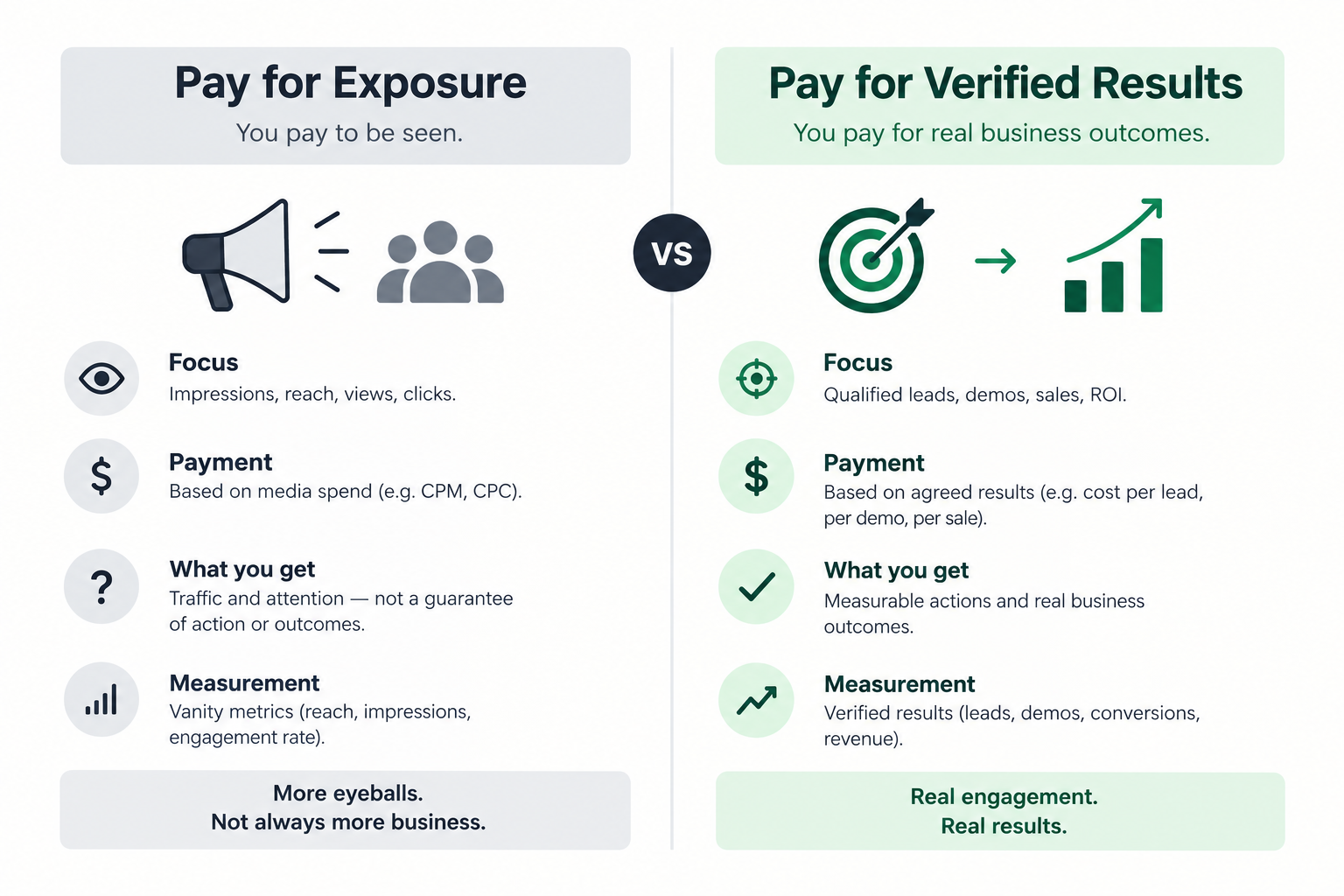
- What you buy. Ads buy exposure: impressions, views, clicks. Activation focuses on action: a trial, a sign-up, a visit.
- Depth versus reach. Ads reach many people briefly. Activation reaches fewer people more directly.
- Trust. A person who explains your product and answers questions can build trust in ways a feed placement cannot.
- Measurement. Ad platforms report what they served. Activation, done properly, reports what people did.
- Feedback. An activation team hears objections and questions directly. That is useful research no dashboard gives you.
A sensible plan often uses both. Ads create familiarity. Activation converts that familiarity into action.
Where traditional activation falls short
Many activation reports end with attendance figures: how many people came past the stand, how many samples went out. But attendance alone says little about business results.
The gap is verification. If the only proof of an activation is a promoter's own count, the brand is trusting the number rather than checking it.
This is the gap KIZUNA Activate is built to close. KIZUNA connects brands with verified participants who complete defined tasks in the real world or online, with qualifying results checked against agreed evidence before they count.
If you want to understand how paying for confirmed results compares with paying for exposure, read our companion article: [Outcome-Based Marketing: Why Pay Per Result](/blog/outcome-based-marketing-pay-per-result).
A simple checklist to start
- Write down the single action you want people to take.
- Name the audience and the places where they gather.
- Decide how you will confirm each action.
- Decide what a good result costs you per confirmed action.
- Plan what happens after the activation, such as a follow-up message or a second step.
If you can answer those five points on one page, you are ready to brief an activation.
Ready to run a measurable activation in Kenya? Talk to the KIZUNA team.
Sources and Links
- Trueblaq, "The Metrics That Actually Matter In Experiential Marketing" (Nairobi agency; argues attendance alone is a weak measure): https://ke.linkedin.com/in/trueblaq-limited
- Overview of experiential and brand activation practice in Kenya: https://odooblog.odoo.com/blog/the-power-of-brand-activations-in-driving-consumer-engagement-1398/the-power-of-brand-activations-in-driving-consumer-engagement-1657